
All Around Texas Roofing repairs and replaces siding across Frisco, McKinney, Prosper, Celina, Anna, Melissa, Aubrey and the surrounding Collin and Denton County communities. We work on fiber cement, vinyl, engineered wood and traditional wood siding.
We also inspect what is behind the panel, not just the face of it, because the expensive part of hail damaged siding is usually the part nobody looks at.
Call (469) 598-0899 to schedule a free inspection of all four elevations.
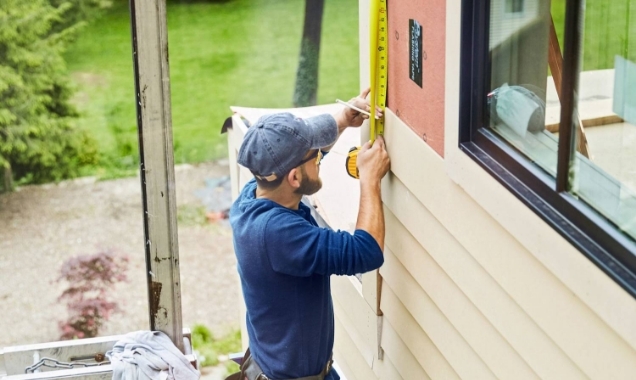
A hailstorm that marked your roof almost always marked your walls, and both belong on the same claim against the same deductible.
The expensive mistake is handling the roof in spring, noticing the siding in summer, and finding the claim was settled without it. The storm did not damage the roof on Tuesday and the siding in July.
So when we inspect after a storm we photograph every elevation, the roof, the gutters, the screens and the fence line, and we scope the lot. Whether a given item is covered is your carrier’s decision; whether it is documented is ours. See insurance claim assistance for how the process runs.

including the sides nobody photographs.
manufacturer and color, so we know before quoting whether a match exists.
We pull panels rather than judging a wall from outside.
with the condition of the barrier and sheathing behind the siding stated.
to a natural break line where a full elevation is not needed.
including caulking, flashing at openings and paint where it applies.
The face of the siding is the least important thing about siding damage.
Behind the panel there is a weather resistive barrier, then sheathing, then framing and insulation. The siding is the first layer of a system, and every layer behind it assumes the ones in front are doing their job.
When an impact opens a panel, water gets past the first layer. If the barrier behind is intact and properly lapped, the system drains as designed. If it was torn during the original installation, lapped the wrong way, or has degraded, the water reaches sheathing instead. From there it is slow and quiet: damp sheathing, swollen sheathing, compromised fasteners, framing, insulation that has stopped insulating, and in the worst cases mold inside a wall cavity nobody opens for years.
A siding repair that puts a fresh panel over a wet wall has hidden the problem, not fixed it.
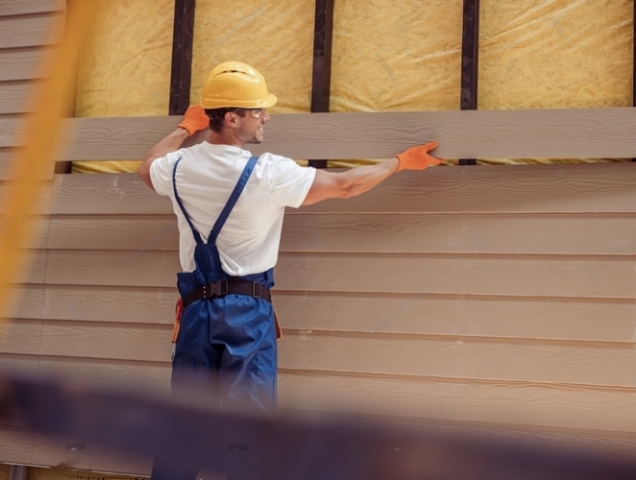
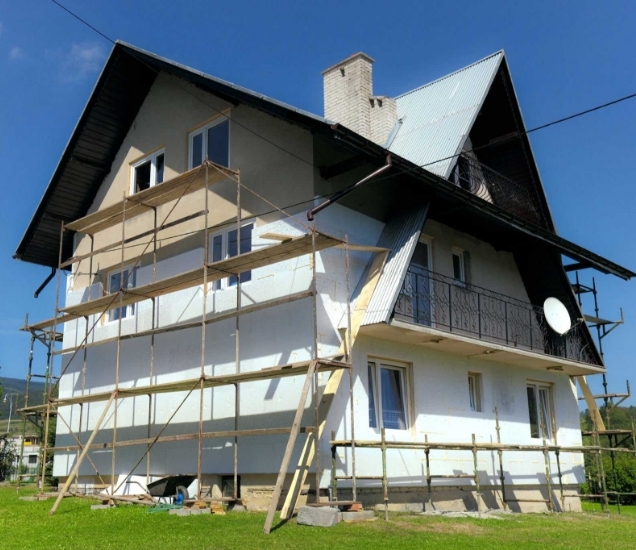
Siding fades. Every material changes color with sun exposure, and the south and west elevations of a North Texas house get a great deal of it. A replacement board in the original color, placed next to twelve year old boards in the same original color, will not match. That is not a defect in the new board.
Manufacturers also discontinue colors and profiles, and a profile change is worse than a color change because it affects shadow lines across the whole wall.
What we do is identify the product before quoting and tell you honestly whether a match exists. Where it does not, the options are replacing to a natural break line so the transition falls where the eye does not read it, or repainting a whole elevation after repair.
What we will not do is tell you what your policy says about matching. Policies differ on it considerably, and anyone who says “insurance always pays for the whole wall” has not read yours.

We open the wall at the damage points rather than quoting from the driveway.

We check all four elevations, including the one the storm actually hit.

We identify the product and color before quoting, so the matching conversation happens before the work.

We quote a sheathing replacement rate for damage found behind the panel.

One contractor for the whole exterior, so the storm claim reflects the storm.

We say when a repair will be visible from the street, before you pay for it.
We repair and replace siding across:
Our office is on Preston Road in Frisco.
Siding is rarely the only thing a storm damaged. Related work includes storm damage repair , window repair , soffit and fascia repair and exterior trim and carpentry. If the roof took the same storm, start with a free roof inspection.
 4.9★ Rating from 1,235+ Texas Roofing Customers

It depends on the material. Fiber cement shows circular chips exposing lighter substrate. Vinyl dents, cracks and punctures. Engineered wood chips through its overlay to a rougher layer beneath. Wood dents and splits with visible fiber damage. Check all four elevations, because the side that faced the storm is often not the side facing the street.
Usually yes, if the material is still available. The harder question is whether it will look right, since existing siding has faded and the replacement will not have. We identify the product before quoting and tell you honestly how a single board repair will read from the street.
Water gets past the first layer of the wall. Whether that matters depends on the condition of the barrier behind it, which is why an inspection opens the wall rather than judging from outside. Left long enough the sequence is damp sheathing, swollen sheathing, then compromised framing and insulation, and the repair gets considerably more expensive at every step.
It should. One storm event is one claim against one deductible, and damage to the roof, siding, gutters, screens and fencing belongs in one scope. Handling them separately months apart is how the later items end up uncovered.
Fiber cement generally resists impact better than vinyl and does not rot like wood, which is much of why it dominates newer construction here. It is not hail proof, and large stones will still chip it. No siding material available is hail proof.
We identify the manufacturer, product line and color, and match where a match exists. Where the material has faded or the color has been discontinued, a new board will not disappear into an old wall, and the options are replacing to a natural break line or repainting the elevation.
An elevation is usually a small number of days. A whole house is longer and depends on the material, how complicated the elevations are and what is found behind the panels. Weather moves it, because siding cannot go on a wet wall.
That depends on your city, and the answers genuinely differ across this service area. Some jurisdictions treat re siding as a permitted alteration and require contractor registration as well. We confirm for your address before work is scheduled, and where a permit is needed we pull it.
Yes, and roof first is usually the right order. One contract, one crew sequence, one set of photographs behind the claim, and no gap where two trades each assume the other handled the flashing at the junction.
If a storm has been through, or you have chips on a wall you have been meaning to ask about, the inspection covers all four elevations and what is behind the panel.
Call (469) 598-0899 or request a free estimate.
© Copyrighted 2026 All Around Texas Roofing. All Rights Reserved. Powered by Fast Hippo Media.
 info@allaroundtexasroofing.com
  Schedule Now
 (469) 598-0899