 info@allaroundtexasroofing.com
 Schedule Now
 (469) 598-0899
When a storm hits North Texas, most homeowners rush outside to check their roof or maybe their fence. It’s natural—these are the most obvious areas that take a beating. But one area that often goes overlooked is the soffit and fascia. These sections, tucked under your roof overhangs and along the roof edge, quietly protect your home from water, pests, and ventilation problems. Ignoring damage here can lead to serious issues that grow quietly over time, sometimes without obvious warning signs.
If you’ve recently experienced hail, high winds, or heavy storms, understanding soffit and fascia damage is crucial. In this article, we’ll explain what these components are, why they matter, how storms damage them, what to look for, and how homeowners in North Texas can address these issues through roof repair North Texas services to keep their homes safe and well-maintained.
What Are Soffit and Fascia?
Before diving into the risks of storm damage, it helps to know exactly what soffit and fascia are and what role they play in your home’s structure.
Fascia Boards
The fascia boards are the vertical panels along the lower edge of your roof, sitting right behind your gutters. They serve a few purposes: protecting the exposed ends of your roof rafters from water damage, providing a secure mounting point for gutters, and giving your home a finished, clean look. Damaged fascia boards compromise all these functions, leaving your roof and walls more vulnerable to the elements.
Soffit Panels
Soffits are the horizontal panels that run under the roof overhang, bridging the space between the exterior walls and the fascia. Many soffits have ventilation holes that allow air to flow into your attic, which helps regulate temperature, prevent moisture buildup, and extend the life of your roofing materials. Damaged soffits disrupt this airflow, often creating hidden problems that worsen gradually.
Simply put, soffit and fascia work together to shield your home from weather, pests, and structural decay. They might not be glamorous, but their role is essential.
Why Storm Damage to Soffit and Fascia Matters
It’s easy to dismiss minor cracks or dents as cosmetic, but soffit and fascia damage can lead to serious structural issues.
Water Damage
Fascia boards protect the roof rafters from water exposure. When a storm loosens or cracks them, rainwater can seep behind gutters and into the roof structure. This leads to rot in rafters, decking, and even wall framing. Over time, the rot spreads and can compromise the integrity of your roof, making repairs more expensive.
Pest Intrusion
Damaged soffit panels are an invitation to pests. Birds, squirrels, insects, and rodents can enter your attic through gaps or holes, causing noise, contamination, and damage to insulation or wiring.
Ventilation Problems
Soffit ventilation is crucial for attic airflow. When panels are damaged or blocked, hot air can accumulate during summer months, increasing stress on shingles and raising indoor cooling costs. Excess moisture trapped in the attic encourages mold growth and can further deteriorate wooden structures.
Compounded Damage
Storms rarely damage just one component. Damaged fascia often goes hand-in-hand with gutter problems. Overflowing gutters can saturate fascia and soffit, accelerating rot and increasing the risk of structural damage.
Even small damage can spiral into larger problems if ignored. This makes it critical to inspect the soffit and fascia after any storm event.
How Storms Damage Soffit and Fascia
North Texas storms bring a mix of high winds, hail, and heavy rain, each affecting your home differently.
- High Winds: Strong gusts can peel fascia boards from rafter tails or push soffit panels out of place. Once displaced, these components cannot perform their protective function properly.
- Hail: Hailstones can crack or dent soffit panels, leaving tiny entry points for water or pests. Aluminum fascia can become dented or warped, weakening its support for gutters.
- Falling Debris: Tree branches or debris propelled by storms can physically break soffit and fascia panels.
- Gutter Overflow: Damaged or clogged gutters often spill water over the fascia. Prolonged exposure to moisture speeds up wood rot and can even affect nearby siding or roofing materials.
Storm damage to soffit and fascia often isn’t immediately obvious, which is why many homeowners only discover the problem after it has worsened over time.
Signs of Soffit and Fascia Damage
Knowing what to look for can save you a lot of trouble and money. Here are common indicators of damage:
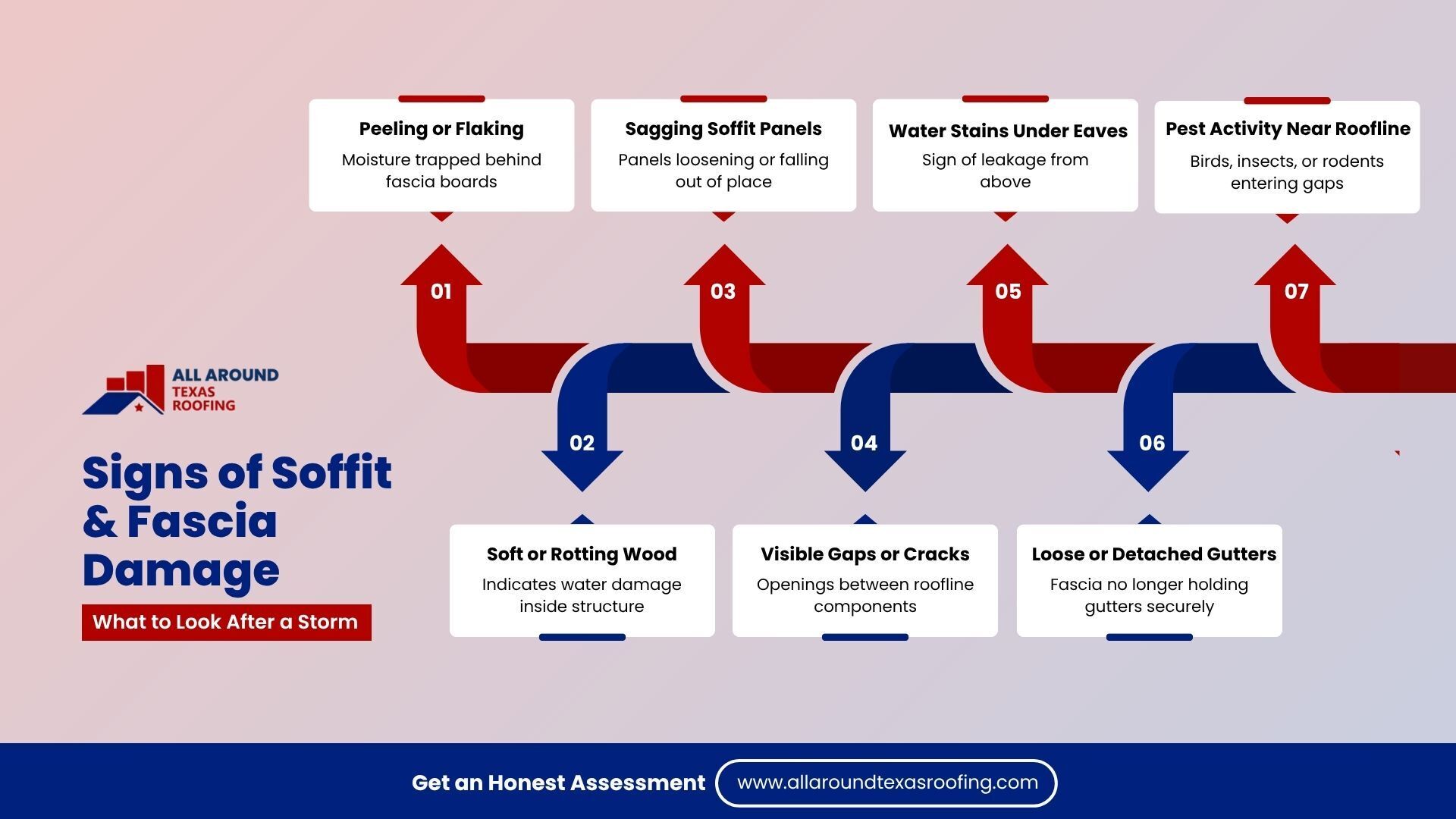
- Peeling, flaking, or bubbling paint on fascia boards
- Soft spots or visible rot when pressed
- Sagging or displaced soffit panels
- Gaps between soffit panels and the wall or fascia
- Water staining on the underside of the eaves
- Detached or loose gutters
- Evidence of pest activity along the roofline (bird nests, insect trails)
Even small signs should be taken seriously, as they often indicate underlying structural issues. Many problems are subtle and require a ladder or professional inspection to catch early.
Soffit and Fascia Repair in North Texas
Repairing damaged soffit or fascia is more than just a cosmetic upgrade—it’s a necessary step to protect your home. Depending on the extent of the damage, repairs can range from patching small sections to replacing entire boards or panels. Materials vary, including wood, vinyl, or aluminum, each with its benefits:
- Wood: Traditional and sturdy, but prone to rot if not properly maintained.
- Vinyl: Resistant to moisture and pests, low maintenance, but can crack in extreme temperatures.
- Aluminum: Durable and dent-resistant, often used for fascia wraps.
Repair costs in North Texas typically range between $6–$20 per linear foot for fascia and $8–$15 per square foot for soffit. Most residential projects fall between $300 and $1,500. Homeowners with storm-related damage often have these costs covered by insurance, which makes timely inspection and documentation even more important.
Insurance Considerations
Storm damage to the soffit and fascia is generally covered under your dwelling coverage. Insurance companies recognize these components as part of your home’s structural protection. When filing a claim:
- Document all damage thoroughly
- Include photographs of affected areas
- Work with a professional inspector to ensure nothing is missed
A full inspection that captures soffit, fascia, roofing, siding, and gutter damage ensures your insurance claim accounts for all repair needs. Many homeowners are surprised to find that soffit and fascia repairs are covered and do not come out of pocket if properly documented.
Preventing Future Damage
While storms are unpredictable, some preventive steps can reduce the severity of soffit and fascia damage:
- Keep trees trimmed away from your roofline to avoid falling branches
- Inspect gutters regularly to prevent overflow
- Maintain soffit and fascia paint or protective coatings
- Address minor damage quickly before it spreads
Regular inspections, especially after storms, can catch damage early and prevent costly repairs later. Homeowners often underestimate how quickly small issues can escalate into major problems.
Why Professional Inspection Matters
Many homeowners think they can spot damage from the ground, but not all problems are visible without a closer look. A professional inspection ensures that even subtle issues are caught. Experts check every panel and board, confirm proper ventilation, and look for hidden rot or water intrusion. In North Texas, companies specializing in storm damage assessments, like All Around Texas Roofing and Restoration, include soffit and fascia in every inspection. This approach ensures you’re not leaving potential damage untreated.
Don’t Overlook Soffit and Fascia
Soffit and fascia might not be the first things you notice after a storm, but ignoring them can cost thousands in repairs and lead to ongoing problems with your roof and attic. From water damage and mold growth to pest infestations and ventilation issues, these hidden storm damages affect your home’s health in ways that are easy to miss.
If you’ve recently experienced a North Texas storm, take the time to inspect your soffit and fascia, or call a trusted professional for a thorough assessment. Early detection and timely repairs protect your home, maintain its value, and ensure your insurance claim covers everything it should.
For homeowners in Prosper, Celina, Frisco, McKinney, Anna, Melissa, and surrounding areas, All Around Texas Roofing offers expert soffit and fascia inspections as part of comprehensive storm damage assessments. Schedule a free inspection today to secure your home against hidden storm damage.