 info@allaroundtexasroofing.com
 Schedule Now
 (469) 598-0899
When a severe storm hits North Texas, it can leave more than just a mess in its wake. A sudden roof leak, missing shingles, or shattered windows can quickly turn into costly water damage, warped floors, and even mold growth. The moments immediately after a storm are critical. Every hour your home is exposed to rain or wind increases the potential for damage. That’s where emergency roof tarping and board-up services come in—helping to stop the damage from spreading while you plan permanent repairs.
In this article, we’ll explain what emergency tarping is, why it’s essential for your home and insurance claim, how the process works, and why you should call trained professionals instead of attempting a DIY fix. By the end, you’ll understand how to protect your home efficiently and safely in the aftermath of a storm.
What Is Emergency Roof Tarping?
Emergency roof tarping is the process of covering damaged sections of a roof with a heavy-duty waterproof tarp. Unlike a simple blue tarp tossed on the roof, professional tarping involves a careful installation using cap nails, wooden battens, and proper anchoring. This ensures the tarp stays secure during moderate winds and rain while protecting your home from further exposure.
The purpose of tarping isn’t permanent repair. It’s a temporary shield that typically lasts 30 to 90 days under normal conditions, giving homeowners time to arrange inspections, insurance claims, and permanent fixes. Proper tarping protects the structural integrity of your home and keeps interior spaces safe from water intrusion.
How Emergency Tarping Protects Your Home
Storm damage rarely comes alone. A single hole in the roof can lead to:
- Soaked insulation, reducing energy efficiency
- Stained or warped drywall
- Damaged flooring or subflooring
- Mold growth, which can affect indoor air quality
- Compromised electrical systems if water reaches wiring
By installing a professional roof tarp immediately, you stop water and debris from entering, preventing these secondary damages. Acting quickly can save thousands of dollars in repair costs and keep your home safe.
Why Emergency Tarping Matters for Insurance Claims
In Texas, homeowners are legally obligated to take reasonable steps to prevent further damage after a loss. This is known as the “duty to mitigate.” Insurance policies can reduce or deny coverage if the damage could have been prevented. Emergency tarping fulfills this duty and demonstrates that you acted responsibly to protect your property.
Most homeowner insurance policies cover the cost of professional emergency tarping as a separate line item, distinct from permanent repairs. Documenting this work with photos and notes helps ensure your claim is processed correctly. Without proper documentation, insurers may dispute costs, leaving you responsible for the additional damage.
The Emergency Tarping Process
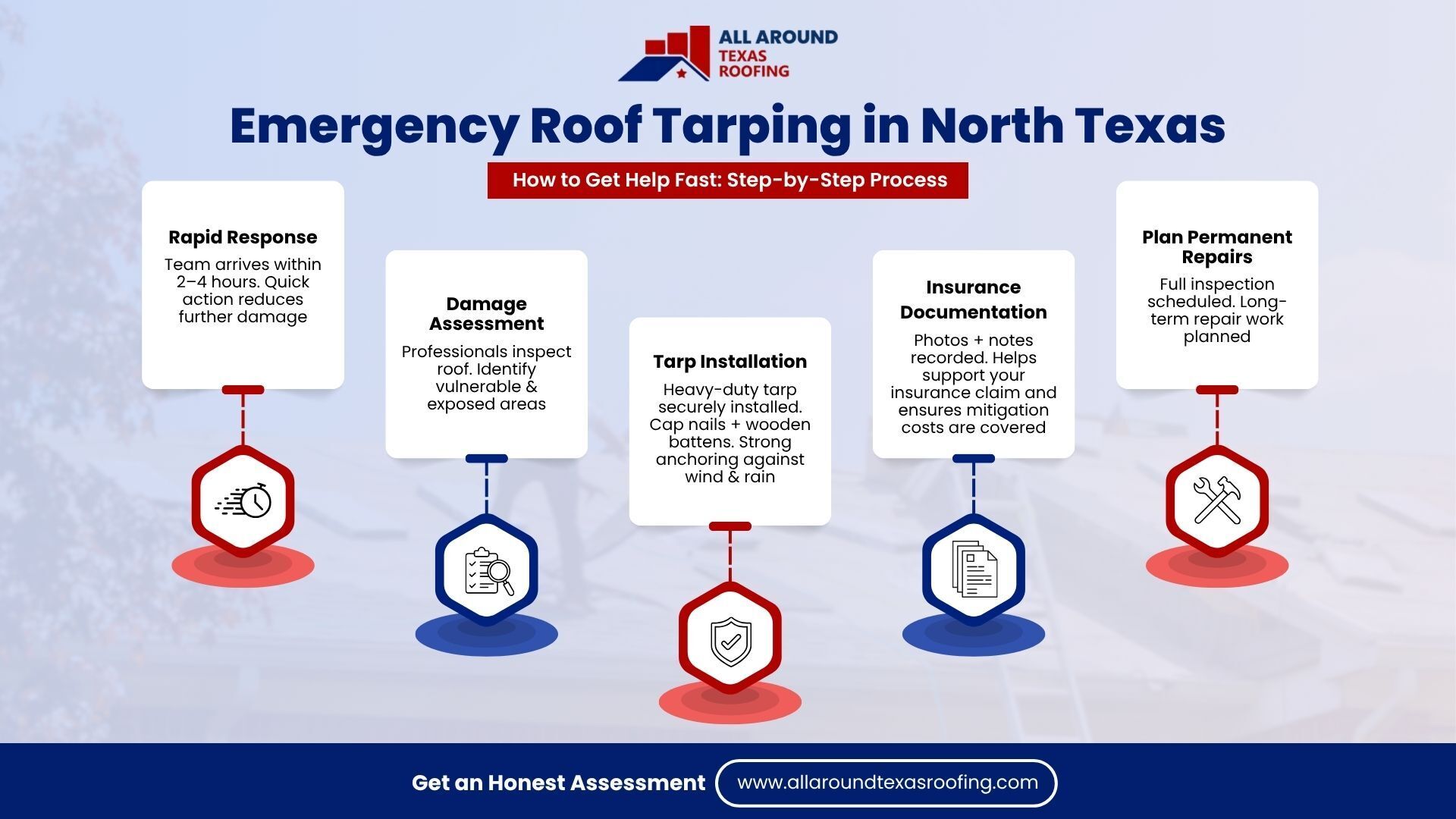
When you call a professional team, here’s what typically happens:
-
Rapid Response
Teams aim to reach your property within 2 to 4 hours in primary service areas like Prosper, Celina, Frisco, McKinney, Anna, and Melissa. During widespread storms, response times may vary depending on the severity of damage across homes in the area.
-
Damage Assessment
Before placing the tarp, professionals inspect the roof to determine which sections need coverage. This ensures that the tarp protects the most vulnerable areas effectively.
-
Tarp Installation
High-quality tarps are secured using cap nails, wooden battens, and proper anchoring techniques. Unlike a DIY approach, this method prevents the tarp from tearing or blowing off in moderate wind or rain.
-
Documentation for Insurance
Photos and written notes of the work are taken for insurance purposes. This documentation ensures your claim includes emergency mitigation costs.
-
Scheduling Permanent Repairs
Once the temporary protection is in place, a comprehensive inspection is scheduled, and permanent repair work is planned.
Protecting Windows and Doors
Storms don’t just damage roofs. Broken windows and doors expose your home to weather, animals, and unauthorized entry. Board-up services install plywood over compromised openings to secure your home until permanent repairs are made. Like roof tarping, board-up work is usually covered by insurance as a mitigation expense.
Why You Should Not Tarp Your Roof Yourself
DIY tarping might seem like a quick fix, but storm-damaged roofs are extremely dangerous. Consider these risks:
- Wet and slippery surfaces
- Loose debris or shingles
- Compromised structural sections
- Unpredictable weather conditions
Falls from roofs cause serious injuries every year. Professional crews have the training, equipment, and insurance to perform emergency tarping safely. Attempting it yourself can put your life at risk.
Choosing a Tarping Service in North Texas
When selecting a company, look for:
- Fast response times for emergencies
- Experience with storm damage mitigation
- Proper safety equipment and trained crews
- Transparent pricing and insurance documentation
A reliable service will act quickly, secure your home effectively, and handle paperwork that makes your insurance claim smoother.
Additional Steps to Take After a Storm
Even after emergency tarping or boarding up, there are several steps homeowners should follow:
1. Document All Damage
Take photos of the damage before and after emergency mitigation. This supports your insurance claim and ensures nothing is overlooked.
2. Contact Your Insurance Company
Notify your insurer as soon as possible and submit the emergency mitigation documentation. This ensures your claim proceeds without unnecessary delays.
3. Schedule a Full Inspection
A thorough inspection identifies all areas affected by the storm, including hidden water damage or structural concerns.
4. Plan Permanent Repairs
After temporary measures are in place and documented, schedule the permanent repairs. Waiting too long can increase repair costs or worsen damage.
Emergency Tarping: Common Questions
How quickly can a crew respond to emergency tarping?
Most services aim for a 2–4 hour response within their primary service area. During large-scale storm events, priority is given to homes with the most urgent exposure.
Does insurance cover emergency tarping?
Yes. It is typically listed as a separate line item on most Texas homeowner insurance policies and considered a mitigation expense.
How long does a professionally installed tarp last?
Properly installed tarps provide 30–90 days of protection under normal weather conditions. They are secured to withstand moderate rain and wind.
Can I tarp my roof myself?
No. Storm-damaged roofs are extremely hazardous. Professional crews have the expertise, safety equipment, and insurance to complete the job safely.
Protecting Your Home Is a Priority
A storm can happen in minutes, but the damage can last for years if not addressed properly. Emergency roof tarping and board-up services are your first line of defense, preventing water intrusion, structural damage, and costly repairs. The time invested in immediate action pays off by preserving your home and helping your insurance claim run smoothly.
For homeowners in North Texas, calling a trusted local company like All Around Texas Roofing ensures fast, professional, and safe mitigation. Their teams respond quickly, install reliable tarps, board up openings, and document all work for your insurance. Whether in Prosper, Celina, Frisco, McKinney, Anna, Melissa, or surrounding communities, immediate action can save thousands and provide peace of mind during stressful times.
Don’t wait until the damage worsens. Protect your home now, document everything for your claim, and plan for permanent repairs with confidence.