 info@allaroundtexasroofing.com
 Schedule Now
 (469) 598-0899
After a major hailstorm or wind event in North Texas, neighborhoods can feel like ground zero for roofing companies. Trucks line the streets. Door knockers promise “free inspections.” Yard signs multiply overnight. While many contractors are legitimate professionals, others are temporary operators looking to capitalize on storm damage before moving on to the next city.
Choosing the right roofing contractor in North Texas isn’t just about price; it’s about protecting your home, your insurance claim, and your long-term investment. Here’s a comprehensive guide to choosing the best roofer in the DFW area and avoiding costly mistakes.
Why Choose the Right Roofer in DFW
Your roof is your home’s first line of defense against hail, wind, heat, and heavy rain. In the Dallas–Fort Worth metroplex, roofing systems endure the following:
- Severe hailstorms
- High straight-line winds
- Extreme summer heat
- Sudden temperature swings
A poorly installed roof can lead to the following:
- Interior water damage
- Mold growth
- Voided manufacturer warranties
- Insurance claim complications
- Reduced property value
The right contractor ensures your roof is installed correctly, your claim is handled ethically, and your home is protected for years to come.
What to Look For in a North Texas Roofing Contractor
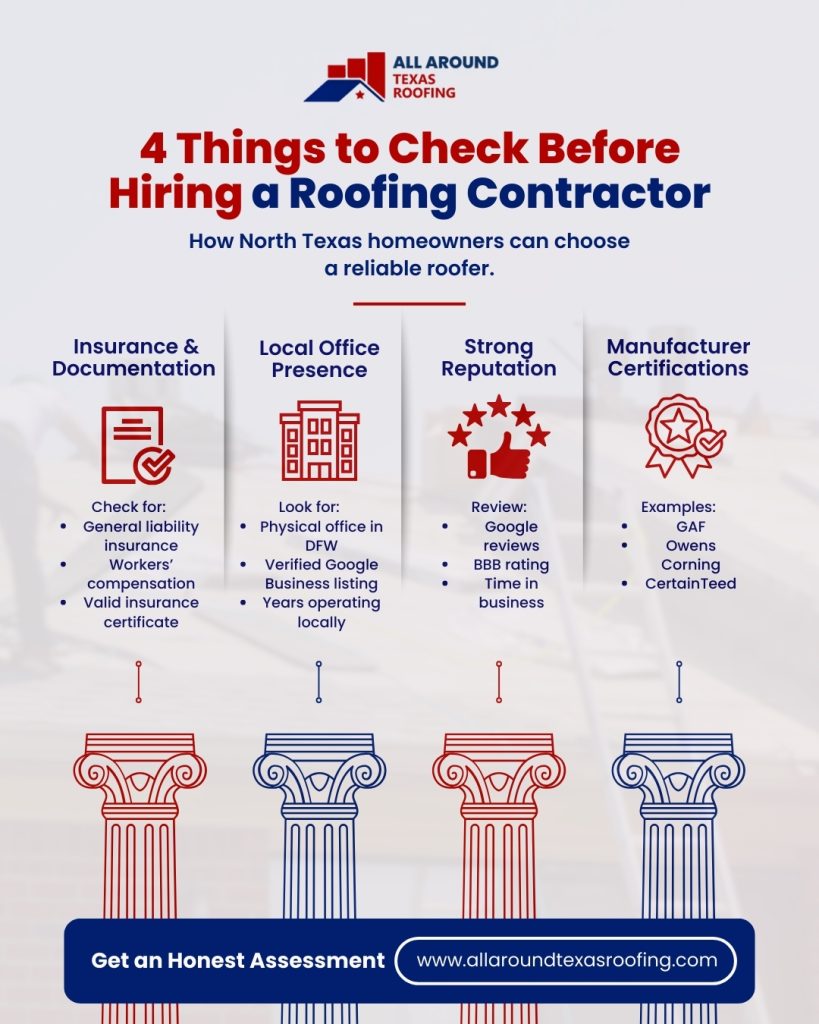
1. Proper Insurance & Documentation
Texas does not require a statewide roofing license, which makes verifying insurance even more critical.
Ask for:
- General liability insurance
- Workers’ compensation coverage
- A current certificate of insurance
A reputable contractor will provide documentation without hesitation. You can even call the insurance carrier listed on the certificate to verify the policy is active.
Why this matters:
If a worker gets injured on your property and the contractor lacks coverage, you could be financially liable.
2. A Permanent Local Office
Look for a contractor with a physical office in the DFW area, not just a P.O. box or a truck with out-of-state plates.
Check:
- Google Business Profile
- Physical address on their website
- Local signage
- Years of operating in the area
Contractors who live and work in your community are far more likely to honor warranties and respond if issues arise later.
3. Established Reputation in DFW
Before signing anything, review:
- Google reviews
- BBB rating
- BuildZoom permits
- Length of time in business locally
A strong rating with the Better Business Bureau, especially an A+, signals a commitment to customer service and ethical business practices.
Look beyond star ratings, especially when comparing options for roofing in Prosper, TX. Read the reviews. Are they detailed? Do they mention communication, cleanup, and warranty follow-up?
Longevity matters. A company serving DFW for 7+ years is far more reliable than one that appeared last month after a storm.
4. Manufacturer Certifications
High-quality contractors pursue certifications from leading roofing manufacturers such as
- GAF
- Owens Corning
- CertainTeed
These certifications indicate the following:
- Ongoing professional training
- Proper installation standards
- Eligibility to offer enhanced manufacturer warranties
Not every roofer can offer upgraded warranties. Certified contractors can.
Roofing Contractor Red Flags in North Texas
After storms in DFW, certain warning signs become more common.
1. Door-knocking Immediately After a Storm
While not illegal, high-pressure door-knocking right after hail hits can indicate a “storm chaser” operation.
These contractors often:
- Travel from state to state
- Use temporary crews
- Leave before warranty issues surface
Local contractors are typically busy serving existing customers first.
2. Asking for Full Payment Upfront
Never pay in full before work begins.
A standard payment structure usually looks like:
- Deposit after materials are delivered
- Progress payment (if applicable)
- Final payment after completion and inspection
Full upfront payment is one of the biggest red flags for roofers.
3. Offering to “Cover Your Deductible
In Texas, this is illegal.
Waiving, absorbing, or paying a homeowner’s deductible constitutes insurance fraud. If a contractor offers this, walk away immediately.
Legitimate contractors will explain the law clearly and refuse to participate in fraudulent activity.
4. Suspiciously Low Bids
If one estimate is dramatically lower than others, ask why.
Low bids often mean:
- Inferior materials
- Skipped installation steps
- No insurance coverage
- Unqualified labor
You may save money upfront but pay far more later.
5. Assignment of Benefits (AOB) Contracts
An Assignment of Benefits transfers control of your insurance claim to the contractor.
Before signing:
- Understand what rights you’re giving up
- Review the agreement carefully
- Consider consulting your insurance company
Never sign an AOB without fully understanding the legal implications.
Why Contractor Presence at the Adjuster Meeting Matters
When filing a storm-damage insurance claim, your insurance company will send an adjuster to inspect your property.
Having your contractor present can:
- Identify damage the adjuster might miss
- Explain repair requirements in technical terms
- Ensure code upgrades are included
- Help secure full coverage for legitimate damage
This often results in a more accurate and comprehensive claim outcome.
Understanding Storm Chasers in Roofing
A “storm chaser” is a contractor who follows major weather events across regions. While not all are unethical, many:
- Use high-pressure sales tactics
- Employ temporary subcontractors
- Offer minimal warranty support
- Disappear after payment
In contrast, local North Texas contractors depend on reputation, referrals, and repeat business.
Choosing local reduces risk significantly.
Protecting Yourself During a Roofing Insurance Claim
Homeowners in DFW should:
- Document damage with photos
- Contact their insurance company directly
- Avoid signing contracts before claim approval
- Verify all paperwork carefully
- Keep copies of every communication
A reputable roofing contractor will guide you through the process, not pressure you.
The Long-Term Value of Choosing the Right Roofer
A high-quality installation can:
- Increase property value
- Improve energy efficiency
- Reduce maintenance costs
- Maintain manufacturer warranty coverage
- Prevent structural damage
A poor installation can void warranties and cost thousands in repairs.
Roofing is not the place to gamble on the cheapest bid.
Final Thoughts
Choosing the right commercial or residential roofing contractor in North Texas requires careful research, not quick decisions made after a storm. Verify insurance, confirm local presence, and look for an established reputation in the DFW area.
Working with a trusted local roofing company like All Around Texas Roofing can give homeowners confidence that the contractor understands regional weather challenges, building standards, and insurance processes common across North Texas.
Avoid high-pressure tactics, unusually low bids, and illegal deductible offers. Ask detailed questions and make sure your contractor will support you through the insurance process. A quality roofer protects not just your roof but also your home, finances, and long-term peace of mind.