 info@allaroundtexasroofing.com
 Schedule Now
 (469) 598-0899
Your roof does a quiet, steady job. It stands between your home and everything Texas weather throws at it. The sun that bakes shingles for months. Sudden hailstorms that hit hard and fast. Heavy rain that tests every seam and flashing edge.
Most of the time, you don’t think about your roof. And that’s fair. If it’s doing its job, it stays out of sight and out of mind.
But when something feels off a small stain on the ceiling, a few shingles in the yard, a drip you hear during a storm it’s your roof’s way of asking for attention. The tricky part is knowing what’s minor and what requires roof repair in Frisco before the damage spreads.
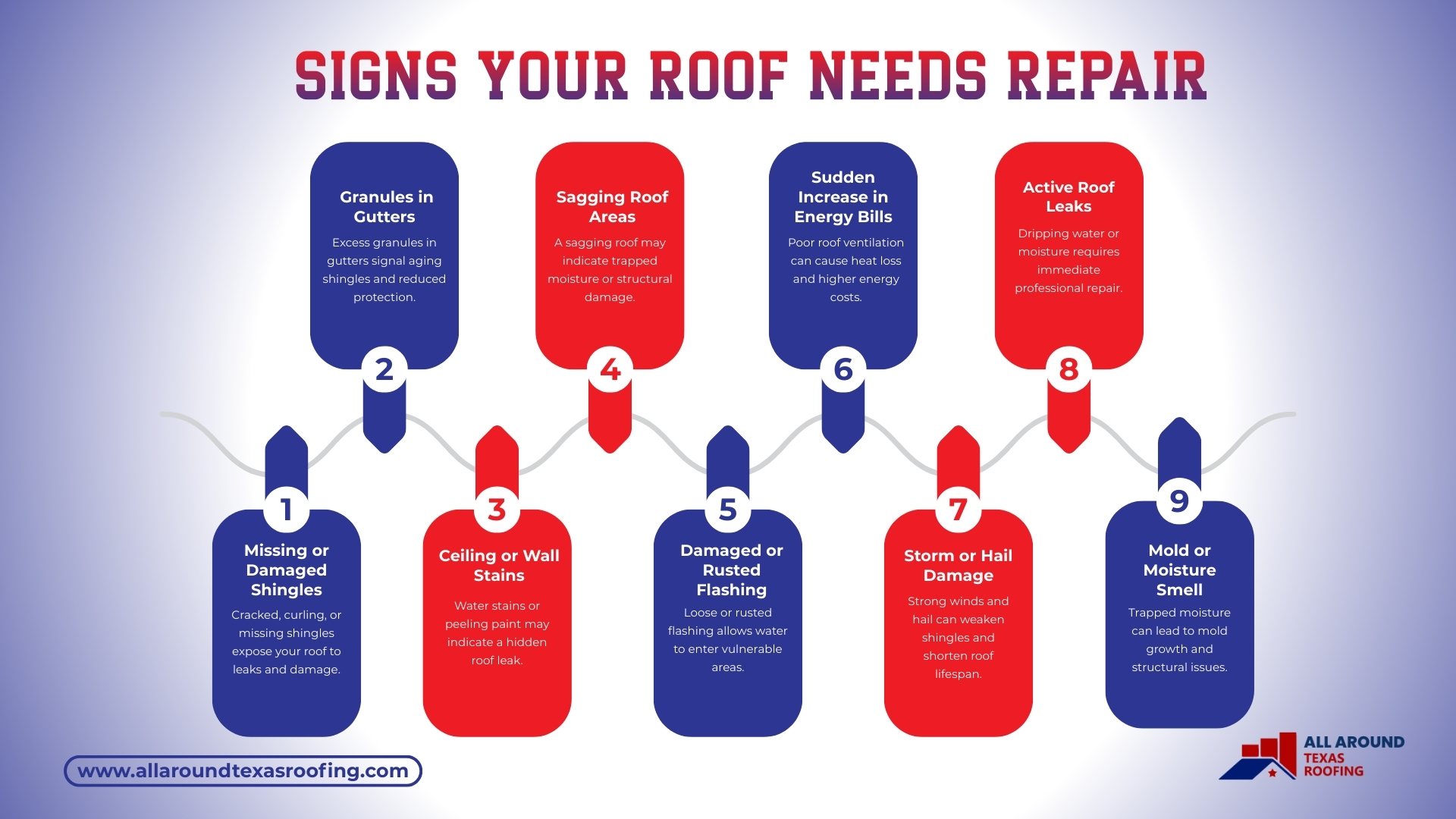
Let’s walk through the clear signs your roof may need repair and what to do next so you can protect your home before a small issue turns into a major expense.
Why Small Roof Problems Rarely Stay Small
A roof system is layered. You have shingles or other surface material, underlayment beneath that, flashing around edges and penetrations, ventilation components, and decking underneath it all. When one part fails, moisture can slip through and affect everything below.
Water doesn’t usually pour in right away. It seeps. It travels. It stains insulation. It softens wood. It creates conditions for mold. By the time you see interior damage, the issue may have been developing for weeks or even months.
That’s why spotting early warning signs matters so much.
1. Missing, Cracked, or Curling Shingles
Shingles are your roof’s first line of defense. When they’re damaged or missing, the layers beneath them are exposed.
You might notice:
- Bare spots where shingles used to be
- Shingles that are curling at the edges
- Cracks running across the surface
- Tabs that look lifted or loose
Texas heat can cause shingles to age faster. Over time, they dry out and lose flexibility. After a windstorm, you might find pieces in your yard or see uneven lines across your roof.
What to do next:
If you can safely view your roof from the ground with binoculars, take a look. Avoid climbing up yourself. A professional inspection can confirm whether it’s a simple repair or a sign that the roof is nearing the end of its lifespan.
2. Granules Collecting in Gutters
Asphalt shingles are coated with small granules. They protect against UV rays and improve durability. Over time, some granule loss is normal.
But if you’re cleaning your gutters and notice a heavy buildup of sand-like material, that’s a red flag.
Granule loss means the shingles are wearing down. Without that protective layer, they become more vulnerable to sun damage and cracking.
What to do next:
Schedule a roof check. If the granule loss is widespread, you may be looking at more than a patch repair. Catching it early can help you plan instead of scrambling during the next storm.
3. Water Stains on Ceilings or Walls
This is one of the most obvious signs, and one of the most stressful.
A brown or yellow stain on the ceiling often points to a roof leak. The leak might not be directly above the stain. Water can travel along beams before it finally drips through the drywall.
You might also see:
- Peeling paint
- Bubbling drywall
- Damp spots after heavy rain
What to do next:
Don’t wait to see if it dries up. Even if the stain seems small, the source needs to be found. A professional roofer can trace the leak and repair flashing, replace damaged shingles, or seal vulnerable areas.
4. Sagging Areas on the Roof
Stand across the street and look at your roofline. Does it appear straight? Or do you see a dip in certain areas?
A sagging roof can indicate:
- Trapped moisture in the decking
- Rotting wood beneath shingles
- Structural strain
This isn’t a minor cosmetic issue. It can point to more serious damage.
What to do next:
Have it inspected as soon as possible. Structural concerns should never be delayed. In many cases, early intervention can prevent a much larger repair later.
5. Flashing That Looks Loose or Rusted
Flashing is the metal material installed around chimneys, vents, skylights, and roof valleys. It seals gaps where water would otherwise slip in.
If flashing becomes loose, cracked, or rusted, water can enter quickly.
After strong winds or hail, flashing can shift slightly. That tiny movement can create a path for moisture.
What to do next:
If you see lifted metal or rust streaks near these areas, it’s worth scheduling a repair. Flashing repairs are often straightforward if handled early.
6. Higher Energy Bills Without a Clear Reason
This one surprises people.
If your roof ventilation is compromised, your attic may trap heat. During a Texas summer, that trapped heat makes your HVAC system work harder. In winter, poor insulation caused by moisture damage can lead to heat loss.
If your energy bills jump and nothing else has changed, your roof and attic could be part of the reason.
What to do next:
A roofing inspection often includes checking ventilation components and attic conditions. Balanced airflow keeps your roof and home healthier.
7. Storm Damage After Hail or High Winds
In many Texas communities, storms are not rare events. Hail can bruise shingles. High winds can lift edges. Flying debris can puncture roofing materials.
The challenge is that hail damage is not always obvious from the ground. It can look like subtle dents or soft spots that shorten the roof’s lifespan over time.
If your area recently experienced severe weather, it’s smart to have your roof checked even if you don’t see visible damage.
What to do next:
Document the date of the storm and contact a licensed roofing contractor for a free roofing inspection. If damage is found, they can help you understand repair options and whether insurance may apply.
Repair or Replace? How to Tell the Difference
Not every roof issue means replacement. Many problems can be handled with targeted repairs, especially if:
- The damage is limited to one section
- The roof is under 10 to 15 years old
- The underlying decking is solid
- The majority of shingles are still in good condition
Replacement becomes more likely if damage is widespread or the roof is nearing the end of its expected lifespan.
An honest assessment matters. A good contractor will explain both options clearly and show you photos of the problem areas.
What to Do Immediately If You Suspect a Leak
If you notice active dripping during a storm:
- Place a bucket under the leak
- Move valuables away from the area
- If safe, relieve ceiling bulges by carefully puncturing the lowest point to release trapped water.
- Call a roofing professional as soon as possible.
Temporary fixes are not long-term solutions. Roof leaks rarely fix themselves.
Why Professional Inspections Matter
It’s tempting to grab a ladder and check things out yourself. But roofing can be dangerous, and not all damage is visible without experience.
A trained eye knows what to look for:
- Subtle hail impact marks
- Loose sealant around penetrations
- Soft decking under shingles
- Early signs of aging
Routine inspections, especially after major storms, can extend the life of your roof and help you plan financially instead of reacting in a crisis.
Choosing the Right Roofing Contractor
When selecting a roofing company in your local Texas area, look for:
- Proper licensing and insurance
- Local references
- Clear written estimates
- Transparent explanations
- No high-pressure sales tactics
Roof repairs are about trust. You want someone who explains what’s wrong, shows you proof, and answers your questions without rushing you.
The Value of Acting Early
There’s a pattern many homeowners experience. They notice a small issue. It doesn’t seem urgent. Weeks pass. Then, a heavy rain hit,s and the minor problem became a soaked ceiling and damaged insulation.
Acting early almost always saves money. It also reduces stress. There’s peace of mind in knowing your home is protected before the next storm rolls in.
If you’re unsure about your roof’s condition, a professional evaluation can give you clarity. Companies like All Around Texas Roofing provide inspections and straightforward guidance so homeowners can make informed decisions without pressure.
Final Thoughts
Your roof won’t last forever, but it should age on your terms, not because of hidden damage you didn’t see coming.
Missing shingles, granule buildup, ceiling stains, sagging areas, loose flashing, and storm impact are all signs worth paying attention to. None of them should be ignored.
If you’re seeing any of these warning signs, scheduling an inspection is a smart next step. A trusted local contractor, such as All Around Texas Roofing, can assess the condition of your roof and recommend repairs that make sense for your home and budget.
Catching problems early keeps your home dry, your structure sound, and your stress level low. And that’s something every homeowner can appreciate.