 info@allaroundtexasroofing.com
 Schedule Now
 (469) 598-0899
Storms aren’t exactly rare in North Texas, and if you’ve lived in Frisco even a short while, you know how quickly the weather can turn. One minute it’s calm, the next you’re hearing hail slam into your roof shingles, gutters, and siding like a drumline.
Most homeowners don’t think about storm prep or roof maintenance until after something breaks. That’s usually when the stress kicks in, along with unexpected roof repair costs. A little preparation ahead of time can save you a lot of trouble later.
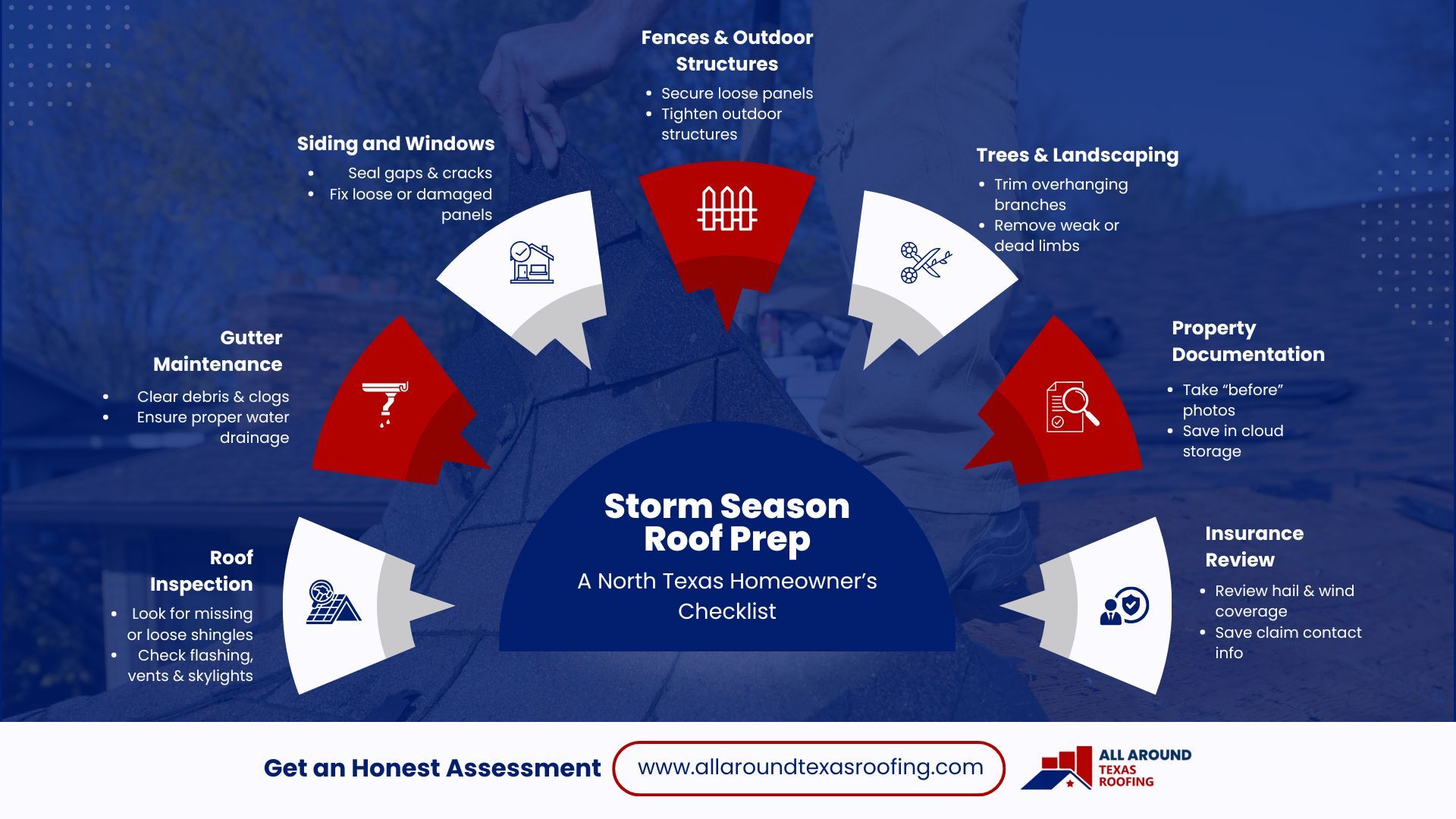
This guide walks you through a practical, step-by-step checklist to get your home and your roof in Frisco ready before storm season hits. Nothing fancy, nothing overwhelming. Just the steps that actually make a difference in protecting your home from storm damage in North Texas.
Understanding Storm Season in North Texas
Storm activity here isn’t limited to just one season, but there are clear peaks.
- Spring (March through June): The most intense stretch, with hailstorms, strong winds, and tornado risks
- Fall (October and November): A second wave of storm activity
- Winter (December through February): Ice storms and freezing conditions, which can be just as damaging
If there’s one takeaway, it’s this: waiting until a storm is in the forecast is already too late.
Start at the Top: Your Roof Matters Most
Your roof takes the first hit in any storm. It’s also one of the easiest places for small issues to turn into expensive repairs.
What to check
Take a slow walk around your property and look up. You’re not trying to be an expert here, just looking for obvious signs.
- Missing or loose shingles
- Curling edges or worn spots
- Dark patches or discoloration
- Debris sitting in valleys
Then take a closer look at key areas:
- Flashing around chimneys and vents
- Skylights
- Pipe boots and seals
If anything looks off, it probably is.
When to call for help
If your roof hasn’t been inspected in the last year, it’s worth scheduling one before storm season ramps up. A professional can spot things most homeowners won’t notice from the ground.
Also, if your roof is getting older, this is the time to think ahead. Impact-resistant shingles (Class 4) can handle hail much better than standard ones.
Gutters: Small System, Big Job
Gutters don’t get much attention until they stop working. Then suddenly, water is pooling near your foundation or spilling over the sides.
What to look for
- Leaves and debris are clogging the system
- Sagging sections
- Loose brackets
- Separated seams
Run water through them if you can. It’s a simple way to see if everything flows properly.
Fixes that go a long way
- Clean them out completely
- Make sure downspouts extend at least 4 feet from your home
- Install gutter guards if clogging is a recurring issue
A working gutter system keeps water away from places it shouldn’t be. That alone can prevent a lot of damage.
Siding and Windows: Your Outer Shield
Wind-driven rain and hail can expose weak spots around your home’s exterior pretty quickly.
Walkaround checklist
Take a slow walk around your home and check for:
- Loose or warped siding panels
- Cracked or missing caulking
- Damaged trim
- Gaps around windows and doors
Even small openings can let water in during a storm.
Extra protection ideas
If you’re in an area that sees frequent hail:
- Consider impact-resistant window film
- Look into storm shutters for large windows
It’s not required, but it can add an extra layer of peace of mind.
Fences and Outdoor Structures: Often Overlooked
It’s easy to focus only on the house, but outdoor structures can cause damage too if they fail during high winds.
Fence check
- Push lightly on fence posts to test stability
- Look for loose panels or nails
- Repair any leaning sections
A weak fence doesn’t just fall; it can take out parts of your yard or even damage your home.
Patio, pergola, and more
Check all outdoor structures:
- Tighten bolts and fasteners
- Inspect connections to your home
- Look for signs of wood rot or weakening
And don’t forget loose items:
- Patio furniture
- Grills
- Planters
- Decorations
If it can move, it can become a projectile in strong winds.
Trees and Landscaping: Quiet Trouble Spots
Trees are great until a branch comes down on your roof.
What to handle before storms
- Trim branches hanging over your home
- Remove dead or weak limbs
- Check tree health if something looks off
You don’t need to cut everything back; just reduce the obvious risks.
Document Your Property Before Anything Happens
This step gets skipped all the time, and it’s one of the most helpful if you ever need to file an insurance claim.
What to do
Take clear photos of:
- Each side of your home
- Your roof (from the ground)
- Fences
- Outdoor structures
- Yard and landscaping
Try to capture everything in good lighting.
Where to store them
Upload your photos to cloud storage. If your phone gets damaged during a storm, you’ll still have access.
These “before” photos can make a huge difference when proving damage later.
Review Your Insurance Before Storm Season
A lot of homeowners don’t fully understand their coverage until they need it. That’s not the best time to figure things out.
Key things to check
- Your wind and hail deductible
- Whether your policy covers Replacement Cost Value (RCV) or Actual Cash Value (ACV)
- Any roof-related limitations or schedules
If anything is unclear, call your agent and ask.
One simple tip
Save your insurance company’s claims number in your phone now. You won’t want to search for it during a stressful situation.
After the Checklist: What Comes Next?
Once you’ve worked through everything, you’re in a much better position than most homeowners.
That doesn’t mean your home is storm-proof. Nothing really is. But you’ve reduced the chances of major damage and made things easier to handle if something does happen.
If you want a second set of eyes on your roof or just prefer having a professional take a look, scheduling an inspection before storm season is a smart move.
Homeowners across North Texas often reach out to All Around Texas Roofing for inspections and storm-related repairs, especially after heavy hail or wind events.
Wrapping It All Together
Storm prep isn’t about doing something complicated. It’s about paying attention to the small things before they turn into bigger problems.
A loose shingle, a clogged gutter, a weak fence post. None of these seems urgent on a normal day. During a storm, they can quickly turn into damage that costs time, money, and a lot of frustration.
Take a weekend, work through this checklist, and you’ll feel the difference the next time dark clouds roll in.