 info@allaroundtexasroofing.com
 Schedule Now
 (469) 598-0899
After a strong hailstorm rolls through North Texas, most homeowners do the same thing first… they look up at the roof. That makes sense. Roof damage gets a lot of attention.
But here’s the thing—your siding often takes just as much of a beating, and it’s sitting right there at eye level. Storm damage in North Texas rarely affects just one part of your home, so paying attention to siding, gutters, and trim is just as important as checking the roof.
If you know what to look for, siding damage is usually easier to spot than roof damage. The tricky part is knowing what “damage” actually looks like, because it shows up differently depending on the material.
Let’s walk through it in a way that actually makes sense—no guesswork, no confusion.
Why Siding Damage Gets Missed So Often
It’s not that the damage isn’t there. It’s that most people don’t realize what they’re seeing.
A small dent? Easy to ignore.
A chipped corner? Might not seem urgent.
But hail doesn’t just leave cosmetic marks. It can weaken the outer layer of your home and quietly open the door to moisture, mold, and long-term structural issues.
And here in North Texas, where hailstorms can hit hard and fast, that risk is real.
How to Check Your Siding After a Storm
Before getting into specific materials, take a few minutes to do a simple walkaround of your home.
Look at all sides—not just the front.
Wind direction plays a big role in how hail hits your house. One wall might look fine, while another took the full impact.
Here’s what to pay attention to:
- Areas facing the direction the storm came from
- Spots under windows and along corners
- Sections near downspouts and trim
- Any place that looks slightly “off” in texture or color
If something catches your eye, don’t ignore it. Trust that instinct and take a closer look.
Vinyl Siding: The Most Obvious Damage
Vinyl siding tends to show hail damage pretty clearly.
It’s a softer material, so when hail hits, it leaves visible marks.
What to Look For
- Round dents or dimples
- Cracks, especially along edges
- Chips or small holes
- Warping or loose panels
If the storm happened during colder weather, the damage could be worse. Vinyl becomes more brittle in low temperatures, which means even moderate hail can cause cracking or breakage.
Sometimes the damage looks minor at first glance. But once a crack forms, water can sneak in behind the panel. That’s where bigger problems start.
Fiber Cement (James Hardie): Subtle but Serious
Fiber cement siding—often called Hardie board—is very common in newer North Texas homes. It holds up better than vinyl, but it’s not immune to hail.
The damage just looks a bit different.
What to Look For
- Small chips in the surface
- Circular marks where paint has been knocked off
- Tiny craters exposing lighter material underneath
- Hairline fractures
At a glance, these marks can look like normal wear. But they’re not.
When the outer layer is compromised, the siding loses part of its protection. Over time, moisture can get in and start breaking things down from the inside.
Wood Siding: Easy to Spot, Hard to Ignore
Wood siding reacts to hail in a more obvious way.
Instead of dents or chips, you’ll often see deeper impact marks.
What to Look For
- Dents with rough or splintered edges
- Gouges in the surface
- Cracks along the grain
- Areas where raw wood is exposed
Once wood is exposed, it doesn’t take long for moisture to cause trouble. Rot can begin quietly and spread faster than most people expect.
This is one of those cases where waiting isn’t a great idea.
Engineered Wood (LP SmartSide): A Mix of Both
Engineered wood siding behaves a lot like natural wood, but with a protective outer layer.
When hail hits, that outer layer can chip away.
What to Look For
- Flaking or chipped coating
- Exposed wood strands underneath
- Swelling or discoloration in damaged areas
Even a small break in the surface can allow moisture in. And once that happens, the material can start to swell or weaken over time.
A Small Detail That Matters: Check for Patterns
Here’s something many homeowners overlook.
Hail damage usually isn’t random.
You’ll often notice a pattern—clusters of impacts in certain areas, usually on one or two sides of the home.
If you’re seeing repeated marks in a consistent direction, that’s a strong sign it came from hail, not normal wear.
What to Do If You Spot Possible Damage
So you’ve found something. Now what?
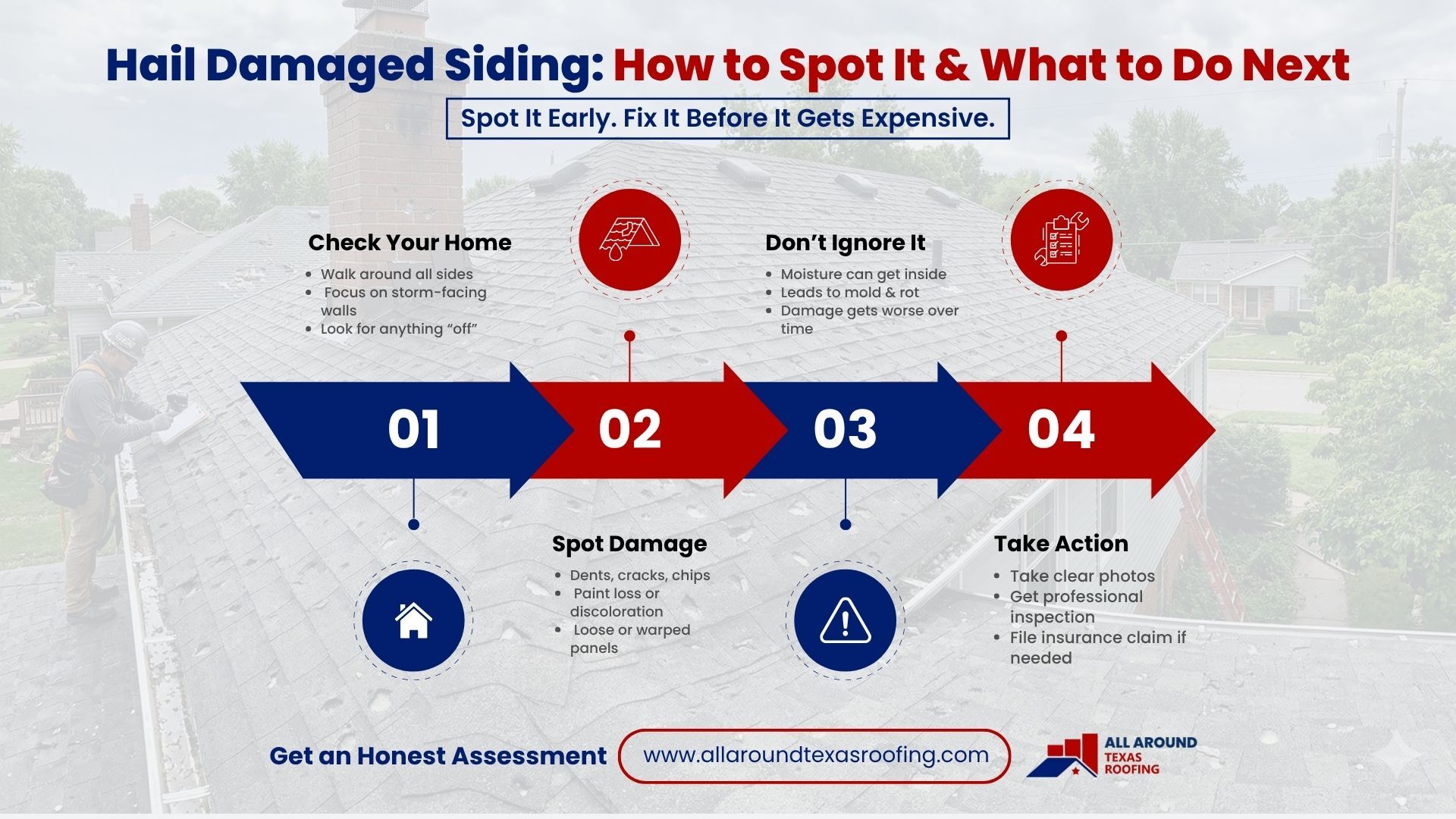
Don’t panic, but don’t ignore it either.
Here’s a simple, practical next step plan:
1. Take Clear Photos
Capture wide shots and close-ups. Try to show the pattern and the detail. This helps later if you need to file a claim.
2. Get a Professional Inspection
Siding damage often goes hand-in-hand with roof damage. A full exterior inspection gives you the complete picture.
3. Review Your Insurance Coverage
Most homeowners’ policies in Texas cover hail damage under dwelling coverage. That includes siding.
4. File a Claim (If Needed)
If the damage is confirmed, your contractor can help document everything properly for your insurance company.
Repair vs Replacement: What Makes Sense?
This is where a lot of homeowners get stuck.
Should you just fix a few panels or replace more of the siding?
After all, roof repair in North Texas is often part of the same storm damage assessment, since hail rarely affects just one part of your home.
It depends on a couple of things:
When Repair Works
- Damage is limited to a small area
- Matching materials are still available
- The rest of the siding is in good shape
When Replacement Makes More Sense
- Damage is spread across multiple areas
- The color has faded and can’t be matched
- The product is discontinued
- Water exposure has already started causing issues
Here’s something many people don’t realize—if your siding can’t be matched, your insurance may cover replacing the entire affected wall so everything looks consistent.
That can make a big difference in both appearance and home value.
What Happens If You Wait Too Long?
It’s tempting to put it off. Life gets busy.
But siding damage doesn’t just sit there quietly forever.
Over time, it can lead to:
- Moisture is getting behind the panels
- Mold growth inside the walls
- Wood rot in framing
- Insulation damage
- Pest entry points
What started as a small dent can slowly turn into a much bigger (and more expensive) issue.
Why Siding and Roof Damage Often Go Together
Hail doesn’t pick and choose.
If your siding is damaged, there’s a strong chance your roof, gutters, or other exterior components were hit too.
That’s why a full inspection matters. Looking at just one part of your home can miss the bigger picture.
Why North Texas Homes Are at Risk
If you live in areas like Frisco, McKinney, Prosper, or Celina, you’ve probably seen how intense hailstorms can get.
Large hail, strong winds, and fast-moving systems are common here.
And with newer neighborhoods using materials like fiber cement and engineered wood, understanding how those materials react to hail is more important than ever.
When It’s Time to Call for Help
If you’re unsure whether what you’re seeing is actual hail damage, it’s worth getting a second opinion.
A trained eye can spot things most homeowners miss.
At All Around Texas Roofing and Restoration, inspections are designed to give you clear answers without pressure. If there’s damage, you’ll know exactly what your options are. If there isn’t, you’ll have peace of mind.
Sometimes, that clarity alone is worth it.
Final Thoughts
Hail damage to siding isn’t always dramatic. It doesn’t always scream for attention.
Sometimes it’s subtle. Easy to overlook. Easy to put off.
But catching it early can save you from bigger headaches later.
Take a few minutes after the next storm. Walk around your home. Look closely.
If something doesn’t seem right, trust that instinct and get it checked.
Your siding does more than make your home look good—it protects everything inside it.