 info@allaroundtexasroofing.com
 Schedule Now
 (469) 598-0899
Hailstorms are just part of life in North Texas. Most homeowners instinctively check the roof after a storm, maybe the gutters too. But windows? They often get overlooked, even though they take a direct hit when hail comes in sideways with strong winds.
So, can hail damage windows? Yes, it absolutely can. And in many cases, the damage isn’t always obvious right away.
If you live anywhere around Dallas, Frisco, McKinney, or the surrounding areas, it’s worth knowing what to look for, what your insurance might cover, and when it’s time to replace or repair your roof.
Let’s walk through it in a way that actually makes sense for real homes and real storms.
Why Windows Take a Beating During Hailstorms
Think about how hail actually hits your home. It rarely falls straight down. In North Texas, storms often push in from the southwest, and wind drives hail at sharp angles. That means your windows, especially on the south and west sides, are right in the line of fire.
Unlike roofing materials that are designed to absorb impact, standard window glass isn’t built for repeated hits from ice traveling at high speed.
A few factors decide how much damage your windows take:
- Hail size: Larger stones can crack or shatter glass on impact
- Wind speed: Faster winds increase impact force
- Window age: Older windows tend to be more brittle or already weakened
- Window type: Single-pane glass is more vulnerable than modern double-pane units
- Home orientation: Certain sides of your house get hit harder depending on storm direction
Even a short storm can leave behind damage that doesn’t show up until weeks later.
What Hail Damage to Windows Actually Looks Like
Some signs are obvious. Others are easy to miss unless you’re really looking.
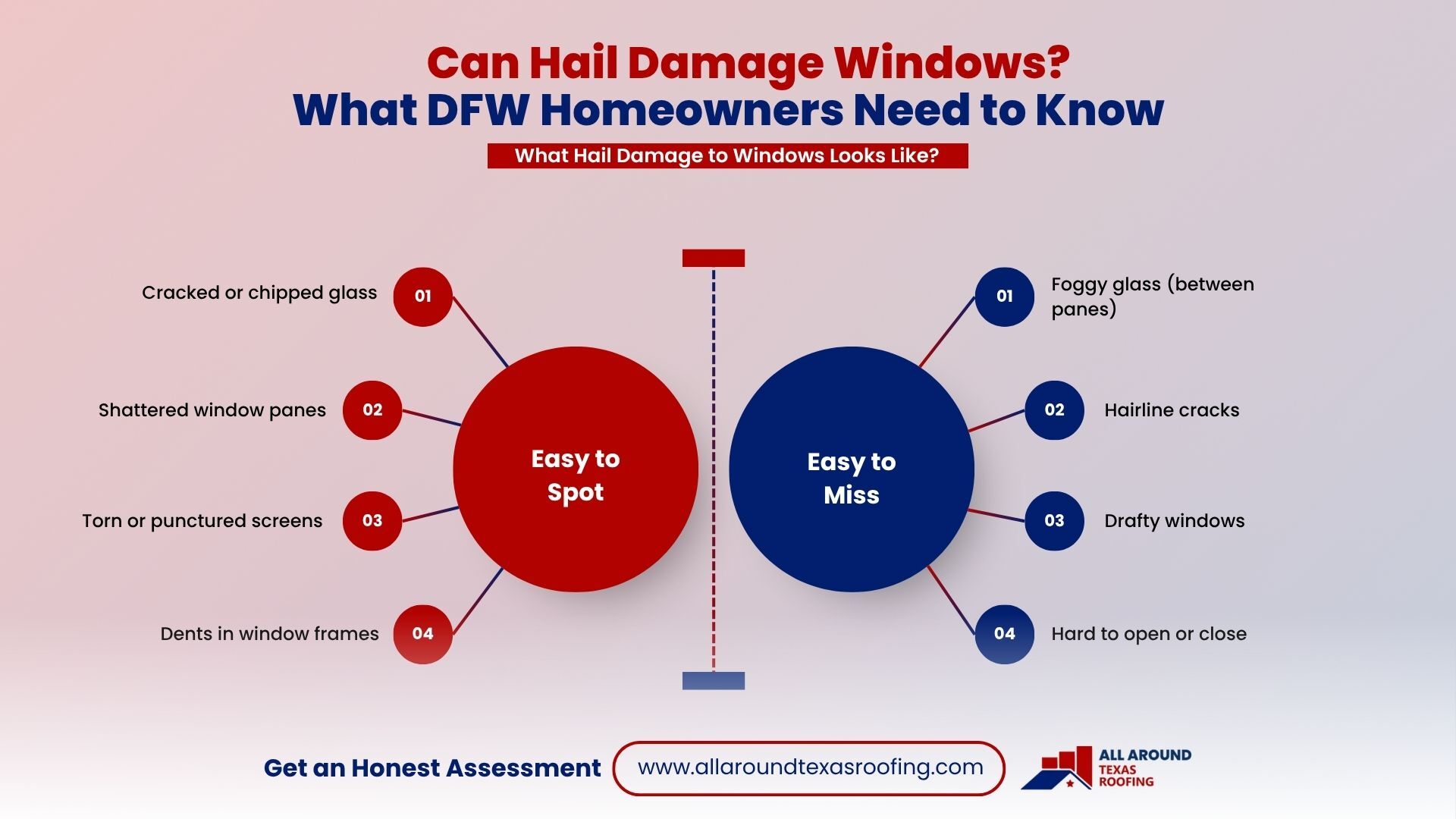
The easy-to-spot damage
This is the stuff most homeowners notice right away:
- Cracked or chipped glass
- Completely shattered panes
- Torn or punctured window screens
- Dents or dings in metal window frames
If you see any of these, you already know something needs attention.
The subtle damage that sneaks up on you
Here’s where it gets tricky. Not all hail damage is dramatic.
You might notice:
- A slight foggy look between the glass panes
- Small hairline cracks that weren’t there before
- Windows that suddenly feel drafty
- Difficulty opening or closing a window
That foggy appearance is a big one. It usually means the seal between double-pane glass has failed.
The Hidden Cost of Broken Window Seals
This is where many homeowners get caught off guard.
Double-pane windows are designed with a sealed space between the glass layers, often filled with insulating gas. When hail impacts that seal, the gas escapes, and moisture can get in.
At first, it may just look like a little haze. No big deal, right?
Not exactly.
Over time, that failed seal leads to the following:
- Reduced insulation
- Higher energy bills
- More strain on your HVAC system
- Visible condensation that never goes away
Now imagine this happening across 15 or 20 windows after a storm. The energy loss adds up fast.
It’s one of those issues that doesn’t feel urgent until your utility bill climbs and your home starts feeling less comfortable.
Can Hail Crack a Window Without Breaking It?
Yes, and this happens more often than people think.
Hail can create tiny fractures in the glass. These might not spread right away, but they weaken the structure of the window.
With temperature changes, especially in Texas, where hot days and cool nights can swing quickly, those small cracks can grow.
So even if your window looks “mostly fine,” it may not stay that way for long.
Frame and Screen Damage Matters Too
Glass gets all the attention, but frames and screens take hits as well.
- Aluminum frames can dent or bend from impact
- Vinyl frames can crack or warp
- Wood frames may chip or absorb moisture if damaged
- Screens can tear or loosen from repeated hail strikes
Frame damage can affect how well your window seals and operates. A window that doesn’t close properly can let in air and water, which leads to more problems down the line.
How to Check Your Windows After a Hailstorm
You don’t need to be an expert to do a basic inspection. Just take your time and look closely.
Start with the outside if it’s safe:
- Check for cracks, chips, or impact marks on the glass
- Look at the frames for dents or damage
- Inspect screens for holes or tears
Then head inside:
- Look for fog or condensation between panes
- Feel for drafts around the edges
- Open and close each window to see if anything feels off
If something doesn’t seem right, trust your gut. Even small issues are worth a second look.
Does Insurance Cover Hail-Damaged Windows?
In most cases, yes.
Standard Texas homeowners’ insurance policies typically cover hail damage to windows under dwelling coverage. That includes:
- Glass repair or replacement
- Frame repair
- Full window replacement if needed
- Labor costs for installation
You’ll still be responsible for your deductible, but beyond that, the damage is usually covered.
One thing to keep in mind: insurance companies expect timely claims. Waiting too long can make it harder to connect the damage to a specific storm.
Repair or Replace the Roof? How to Decide
This depends on how bad the damage is and the condition of your windows overall.
When repair might be enough
- Small cracks or chips in the glass
- Isolated damage to one or two windows
- Frames are still in good shape
In these cases, replacing just the glass panel can work.
When replacement makes more sense
- Broken seals in double-pane windows
- Frame damage or warping
- Older windows that are already worn out
- Multiple windows were affected across the home
Replacing the full unit often gives better long-term results, especially when energy efficiency is part of the equation.
Are Impact-Resistant Windows Worth It in North Texas?
If you’ve been through a few hailstorms, you’ve probably wondered about this.
Impact-resistant windows use laminated glass that’s designed to hold together even when struck. Instead of shattering, the glass may crack but stay in place.
They cost more upfront, no question. But they offer:
- Better protection during storms
- Less chance of sudden breakage
- Potential insurance discounts in some cases
- Added security benefits
For many homeowners, especially in hail-prone areas like DFW, it’s a worthwhile upgrade.
Why Window Damage Often Gets Missed in Storm Inspections
Roof damage is easier to spot and usually takes priority. Insurance adjusters and roof contractors often focus there first.
But windows are just as exposed during a storm, and skipping them during an inspection can lead to missed claims.
A thorough storm inspection should include:
- Roof
- Gutters
- Siding
- Windows and screens
That full-picture approach helps make sure nothing slips through the cracks.
When to Call a Professional
If you notice visible damage, or even if you’re just unsure, it’s a good idea to have a professional inspection.
A trained eye can spot issues that aren’t obvious, especially seal failures and early-stage cracks.
In North Texas, where storms can roll through quickly and leave mixed damage behind, having everything documented properly also helps with insurance claims.
Don’t Ignore Your Windows After a Storm
It’s easy to overlook windows when everything else feels more urgent after a hailstorm. But they play a huge role in your home’s comfort, efficiency, and protection.
A small crack today can turn into a bigger issue tomorrow. A foggy pane might seem harmless until your energy bills start creeping up.
Taking a little time to check your windows now can save you from bigger headaches later.
If you need help with an inspection or aren’t sure what you’re looking at, All Around Texas Roofing can take a look and walk you through your options without any pressure. Sometimes it’s just good to have someone confirm what’s really going on.